 Philadelphia, Pennsylvania

Used Cooking Oil Collection, Recycling & Grease Trap Services in Philadelphia, PA
At Mahoney Environmental, we provide reliable restaurant grease pickup and disposal services across Philadelphia, Pennsylvania.
Philadelphia kitchens produce used cooking oil every shift, and it has to be picked up by an approved hauler rather than poured down a drain. Mahoney Environmental has handled that work since 1953.
We collect used cooking oil (UCO), clean and pump grease traps, and install the equipment behind all three, serving commercial kitchens in Philadelphia County and the surrounding suburbs from our facility in Modena, PA. We are a licensed EPA recycler; every gallon we pick up is documented, and that oil is refined into renewable diesel and sustainable aviation fuel (SAF).
What Philadelphia Expects from a Food Service Kitchen
Grease becomes a sewer problem before it becomes a kitchen problem, and the Philadelphia Water Department treats it that way. The city’s plumbing code generally requires food establishments to route kitchen drains through a properly sized grease interceptor, and the Water Department regulates what reaches the sewer system from commercial kitchens and any industrial user discharging into it. For most operators, that comes down to three things:
- An interceptor or grease trap sized for the fixtures feeding it
- Waste oil and trap waste leaving with an approved hauler instead of going down a drain
- Pumping and service records kept current for inspectors and the government agencies that ask for them
Fall short on any of those and a plumbing issue turns into a citation. The same rules apply across the Philadelphia area, whatever kind of kitchen you run, and our routes cover:
Used Cooking Oil Collection and Recycling in Philadelphia
Oil breaks down at a rate your menu sets. Deep fryers running all day age it quickly, while a kitchen that fries in batches gets more weeks out of the same oil, so we build pickup frequency around output instead of a default date. Spent oil sits in a holding tank until our driver pumps it into the truck, then the load runs to a Mahoney processing facility where water and food solids come out before the used oil continues as renewable fuel feedstock. Vegetable oil, olive oil, and standard fryer blends all end up as the same material.
Every Philadelphia cooking oil collection program includes:
- Frequency set by output: Oil collection timed to how much your fryers actually turn over
- Tank checks: Monitoring that keeps the storage tank from filling up between visits
- Approved hauling and processing: EPA-licensed transport out of your kitchen and into a Mahoney plant
- Equipment we install and service: Containers and handling systems specified, set up, and maintained by our crews
- Gallons on paper: Documented volumes for audits, compliance files, and sustainability reporting
Used cooking oil is not hazardous waste. It is a recoverable material with buyers behind it, which is why an industrial facility or food processor with continuous fry lines gets bulk storage sized to the volume rather than a disposal arrangement.
Grease Trap Cleaning and Maintenance for Philadelphia Commercial Kitchens
A grease trap works by slowing wastewater down. Baffles inside the tank hold the flow long enough for FOG to rise and for food solids, broken into smaller pieces by the dish line, to settle on the bottom. Only the middle layer leaves through the outlet pipe. Separation holds until the tank fills, and once grease and solids claim about a quarter of the depth, FOG starts moving into the sewer line. Our page on how grease traps work goes through it step by step.
Consequences of a Neglected Grease Trap
- Water and waste backing up onto the kitchen floor during service
- Odors near the dish station that reach the dining room
- Sanitation violations written up at your next inspection
- Emergency pumping priced at emergency rates
- Fines tied to missing service documentation
What Our Philadelphia Grease Trap Services Include
- Scheduled pumping: Visits timed to tank size and how fast your kitchen loads it
- Complete cleanout and repair: FOG, solids, and water pulled out, with baffles, lids, and hardware repaired as needed
- Rodding and jetting: Drain lines and sewer lines cleared after buildup has narrowed them
- Interceptor service: Work on the larger outdoor units serving high-volume kitchens
- Written inspections: A condition report at each visit that flags developing problems early
- Emergency crews: Around-the-clock coverage for overflows and sudden clogs
- Documentation: Service records and manifests formatted for your compliance file
How Often Should a Philadelphia Kitchen Clean Its Grease Trap?
Monthly to quarterly fits most kitchens, and the trap tells you more than the calendar does. The working standard is service before FOG and settled solids fill a quarter of the tank, since separation drops off past that point. A fry-heavy menu reaches that line faster than a deli or a coffee program, and an undersink unit fills long before an outdoor interceptor does.
Habits in the kitchen move the schedule as well. Scraping plates into the trash before dishes reach the sink keeps food out of the tank, and keeping cooking oil out of the drain matters down to the last of it in a pan. A grease trap collects and holds. It breaks nothing down. Our preventing backups page covers the rest of the daily practices.
Cooking Oil Equipment and Storage for Philadelphia Kitchens
Carrying hot oil by hand from a fryer to a container is where burns and spills start. The systems we design and install remove that step, and we size them to your kitchen layout and daily oil volume instead of a standard spec.
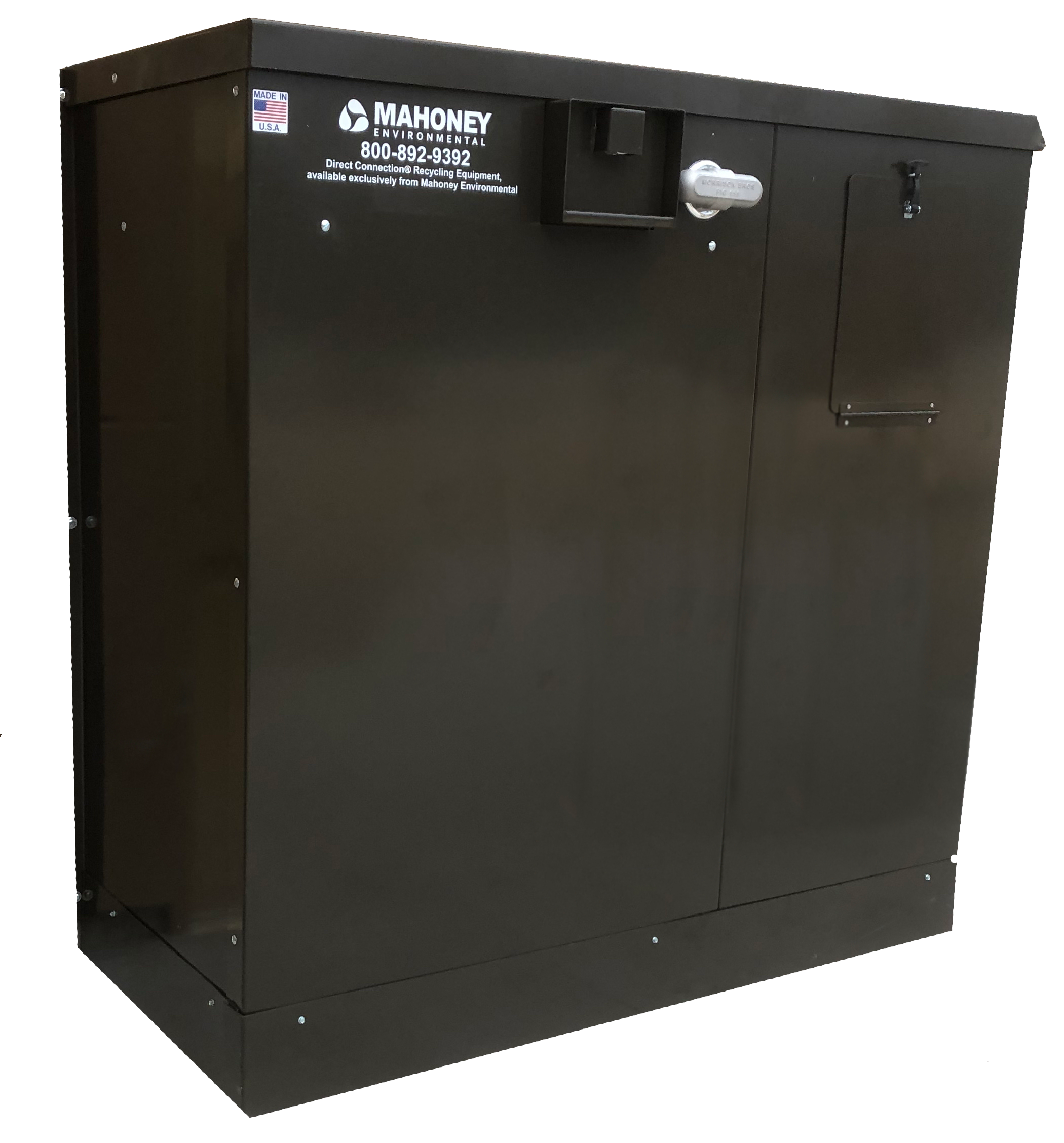
- Direct Connection Recycler System: Fixed lines connect the fryers to indoor or outdoor storage, and a switch or lever moves the oil.
- Indoor System: An interior storage tank piped to each fryer, paired with a portable filter machine that keeps oil usable longer.
- Heated Outdoor Bulk Container: Insulated exterior storage with a level sensor, a screen at the fill point, and an anti-theft lock. (Available in select markets.)
- Standard Storage Systems: Sealed bulk containers that screen debris at the opening, built for kitchens depositing oil by hand.
- Custom Equipment: Tanks, piping, and controls engineered for a space no standard configuration fits.
Models include the MES Inside 183, MES Inside 352, DC 48, DC 72, and DC 600, plus caddies and shuttles where oil still has to move by hand. Because used cooking oil carries resale value, our outdoor tanks use ported access instead of an open lid, which makes siphoning much harder, and Mahoney runs a grease theft program with customers and local law enforcement.
Why Philadelphia Operators Stay with Mahoney
A facility in the region: Our Modena, PA location keeps crews and trucks close to Philadelphia kitchens, which shortens the wait when a trap needs attention before lunch.
Since 1953: Seven decades in foodservice, working the same line of business.
One company end to end: Equipment, collection, processing, and the finished fuel all stay with Mahoney, so no outside hauler stands between your kitchen and the recycler.
Dependable scheduling: Technicians arrive on the day they are booked, which keeps tanks under capacity and traps clear.
Coverage after hours: Traps rarely fail during business hours, so somebody answers at any hour.
Start Cooking Oil Pickup or Grease Trap Service in Philadelphia
Used cooking oil pickup, fresh oil delivery, grease trap cleaning, and the equipment behind them all run on one schedule and one invoice. Call (800) 892-9392, and we will build the program around your fryer count, service hours, and compliance calendar, or contact us online to get started.
Request a Quote | Schedule Service (Current Customers) | Contact Us
Mahoney Environmental serves Philadelphia along with kitchens in Delaware, Montgomery, Bucks, and Chester counties and the surrounding region.

 Call Us Now (800) 892-9392